After just three years in the field, the High Performance Gradients (HPCG) benchmark is emerging as the first viable new metric for the high performance computing crowd in decades. The latest HPCG list compiled last November shows 115 supercomputer entries spread across 16 countries.
A research team at Northwestern University has developed a memtransitor, a device that could be the basis for advanced neuromorphic computers.
OnScale has emerged from stealth mode, unveiling a suite of CAE tools and plugins designed to run in HPC cloud environments.
An international team of researchers have developed an algorithm that represents a big step toward simulating an entire human brain on future exascale systems.
Episode 214: Addison Snell and Michael Feldman analyze this week's top HPC news, including Lenovo's new water-cooled HPC system and the latest US Exascale project budget.
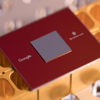
Googles Quantum AI Lab has revealed it is testing a 72-qubit quantum processor in its bid to become the first companyto demonstrate quantum supremacy.
Niagara, Canadas newest multi-petaflop supercomputer tasked for academic use, is now available to researchers across the country.
Chinese-base tech giant Alibaba is challenging American cloud providers in Europe with an HPC service designed for users runninga variety of compute-intensive and data-intensive workloads. The company also unveiled a new cloud-based quantum computing platform.
The US Department of Energy (DOE) would reap $636 million for exascale computing next year if Congress gives the go-ahead to President Trumps budget request for FY 2019. The amount requested is $376 million above the funding level for FY 2017.
Legal tech startup LawGeex has published a study demonstrating their artificial intelligence software is able to identify issues in Non-Disclosure Agreements (NDAs) faster and more accurately than experienced lawyers.